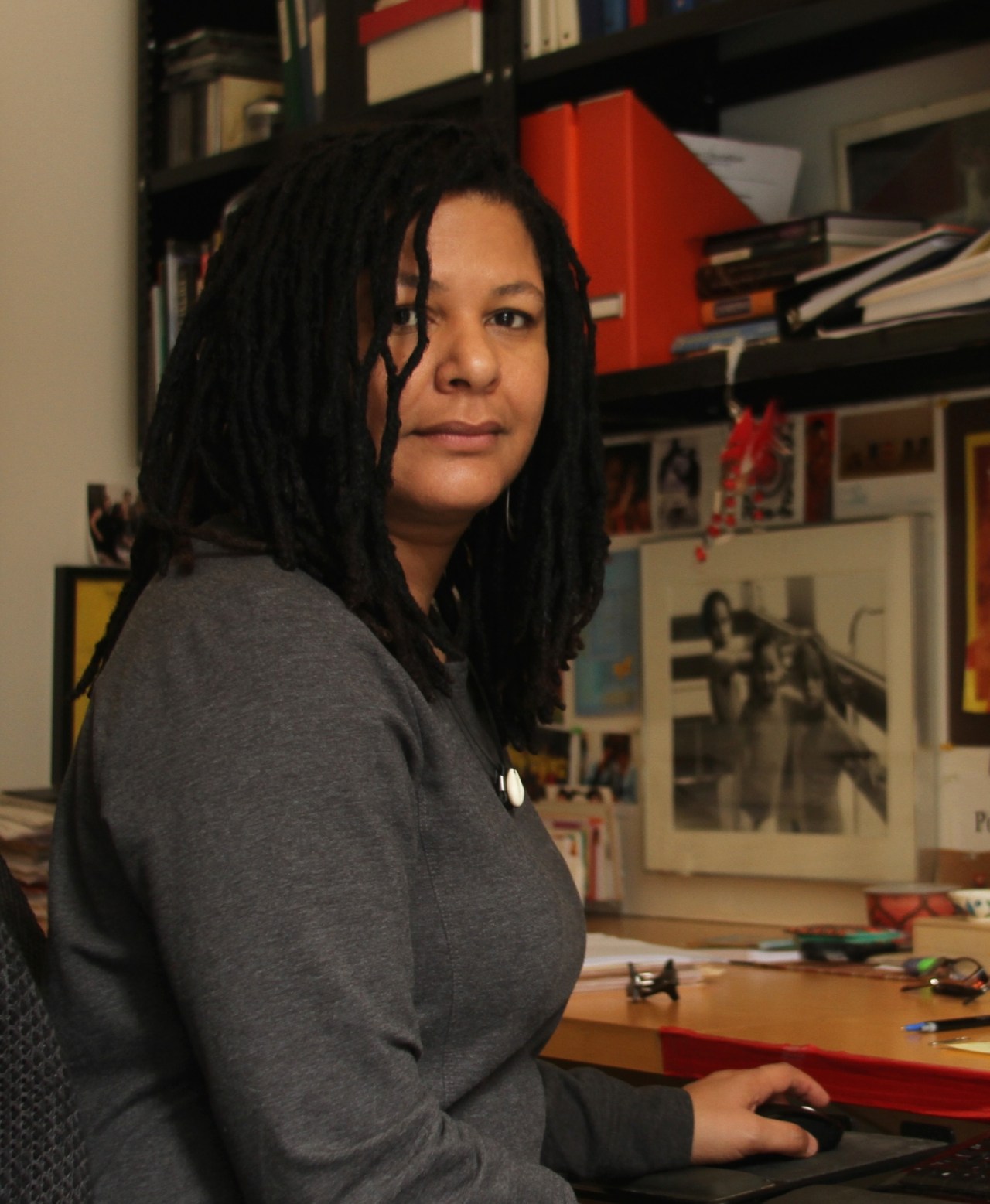
Humbled to be interviewed by John Seroff and honored to be featured in this What Should We Do article:
https://www.whatshouldwedo.com/blog/rachel-watts-artsconnection/
People Who Make NY Special: Rachel Watts, by John Seroff
If it takes a village to raise a child, Rachel Watts is the village elder you didn’t know existed. Through her work as the Director of Programs for the not-for-profit arts education organization ArtsConnection, Rachel helps source professional artists as teaching professionals at over 120 schools in New York City. Groups like ArtsConnection help provide theater, music, painting and other creative programs into classrooms where financial shortfalls would otherwise result in schools without any arts programming at all. The system also provides opportunities for actors and performers to earn a living wage.
I recently spoke with Rachel to have her explain how ArtsConnections works, why NYC schools benefit from introducing art into their curriculum and the one major way she thinks that education could change for the better nationwide.
What Should We Do?: What exactly is the role of teaching artists in the New York public school system?
Rachel Watts: The teaching artist brings their professional artistry into the teaching process. Even for schools that have dance, music, visual art, or theater teachers working full-time (which is hardly a given in New York City), a visiting teaching artist offers students a different approach and perspective on their art form.
At ArtsConnection (AC), most of our work in schools is done in collaboration with classroom teachers and not arts specialists. The teaching artists meet and talk with the classroom teachers, helping them find ways to make connections to other curricular areas. The direct arts learning can be the practice of an art form, the classroom teacher learning strategies based on the artist’s approach, or repurposing the thematic content of the art as a resource for teachers to make connections and deepen student learning.
WSWD: What sorts of programs does Arts Connection provide?
Watts: For the past 40 years, AC has facilitated arts education programs in over 100 New York City schools annually. We have built a reputation as an organization that provides high quality, individually designed programming. A lesser-known aspect of the organization – and one that I am personally very passionate about – are our Teen Programs. Those multifaceted afterschool programs help coordinate teen access to arts and culture institutions across the city. Many of New York’s most important art centers are unfortunately either financially or psychologically inaccessible to many NYC public school students so we aim to bridge that gap. Whether it’s by taking advantage of our High 5 Tickets for events and museum passes, exhibiting student art work, or participating in our Teen Reviewers and Critics Program, ArtsConnection is engaging teens to experience art in a personal and meaningful way that we hope will enrich their lives for years to come.
WSWD: Which schools are you currently working with?
Watts: Far too many to cover all of them with you here. We have been at PS 130 and PS 38 in Brooklyn pretty much since ArtsConnection’s founding. In both schools, the programming has changed over the years but the commitment to arts education has remained constant. At PS 130, above and beyond our music, dance and family programming, we have built a sequential Pre-K to 5th grade puppetry program. That school has a lot of ESL students and the puppet persona they create can help make communicating in English a little less scary. For PS 38k, we provide a steel drum program in the upper elementary grades and they tell us that a highlight of the school year is their performance for families and community. I was raised in Trinidad and Tobago and seeing a Trini instrument used successfully as a tool to enrich the NYC public school experience makes me proud.
WSWD: Did you have an “aha” moment that brought you to this field?
Watts: I wasn’t a very good student. Trinidad, like other countries colonized by England, they followed the old British system of education. It was often counterintuitive; we would learn about pine trees and snow instead of palm trees and beaches. Nevertheless, in my final year of secondary school, I developed a passion for reading, writing and formulating my own ideas. I was writing a research paper for an art class and decided to write about Trinidadian art at a time where there were no books available to research the topic. I had to step out into the real world and find people to interview and artwork on which to reflect. The resulting project focused on three women artists in Trinidad: Sybil Atteck, Pat Bishop and Irenee Shaw. Through that process, I found myself actively engaged in my education in a way that I had never before experienced. I was no longer an average student. I was a curious researcher and I wanted to know more. The memory of that experience informs how I work with institutions and school systems today.
WSWD: You work with an impressive array of performers who moonlight as teaching artists. Are there any we may have heard of doing work around the city?
Watts: Our teaching artist Jojo Gonzalez just finished a run at the Public Theater in Mlima’s Tale, while simultaneously leading creative dramatics residencies for early elementary grades in multiple schools. From the minute Jojo walks into a classroom, he taps into students’ imaginations and gives them the tools to create the most amazing and honest theater. It is amazing to watch him work.
WSWD: Do you have an artistic hobby yourself?
Watts: I studied dance and movement all through high school and college; my area of emphasis is in modern and West African dance. I went to college with the intention of majoring in visual art, but I felt a real calling to education. These days, I say that my current practicing art is “facilitation”.
WSWD: If you could make one change to public schooling on the Federal level, what would it be?
Watts: Based on my observations on what challenges schools most, I would call for a re-examination of the focus on summative assessment –
WSWD: On what now?
Watts: Less testing! And incorporate at least 2 hours a day of play for Pre-K all the way up to 12th grade. When you look at the play of a young child, you see them using found objects and their own imagination to create complex games, rules, and outcomes… all skills that many teens seem to lose as they grow older. Children at play ask questions, investigate answers, take risks, and learn from their mistakes. These kinds of cognitive processing are a vital component of being literate and need to be sustained and strengthened far beyond where they currently are. Teachers should be allowed to spend less time preparing students for standardized tests and instead create opportunities for students to play on their own, with each other, and in project-based activities.
WSWD: What would that look like? I have a hard time believing you could get a high school senior to play make believe.
Watts: I bet they would surprise you. Pragmatically, projects could include exploring the natural world, experiencing different cultures’ arts and traditions, and focusing on problem-solving the issues that affect us at home and around the world. That sort of a change would democratize the process of access to literacy that has traditionally marginalized non-white and less privileged people in America. Students would gain a dramatically greater sense of ownership of their learning, deepen their motivation to continue building their knowledge and define personally pertinent ways to actively engage with the world.
WSWD: If you had 24 hours to yourself in the city, how would you use them?
Watts: One of the free programs for teens we provide in the summer at ArtsConnection is called Map Free City. It takes participants to all 5 boroughs to experience a diversity of performances and visual art. I generally try to do that myself on a regular basis. I would love to successfully complete a 5 borough arts and culture challenge in 1 day. That would be an amazing 24 hours in New York. One of my most recent challenges has been to walk the full length of Broadway from Inwood to Battery Park, I love finding ways to create new experiences in the city. The possibilities are endless.
Rapid Round!
Rachel Watts’ Faves… in a NY Minute.
- Bar?
Ashford and Simpson’s Sugar Bar - Date Night Spot?
The Edge - NYC-themed TV show?
Luke Cage, set in Harlem - Place to dance?
NYC Dope for the best DJ and the best real dancing - City Block or Borough?
Flatbush, Brooklyn for the sights and sounds of my Caribbean heritage. - Day trip?
Storm King
 rachel watts